Real finds from Tokyo: shops, cafes, and everyday home picks

  • Udon at a Yakiniku Restaurant? Spicy Aka Kasu Udon at Ryu-no-Su, Shibuya

    Udon at a Yakiniku Restaurant? Spicy Aka Kasu Udon at Ryu-no-Su, Shibuya

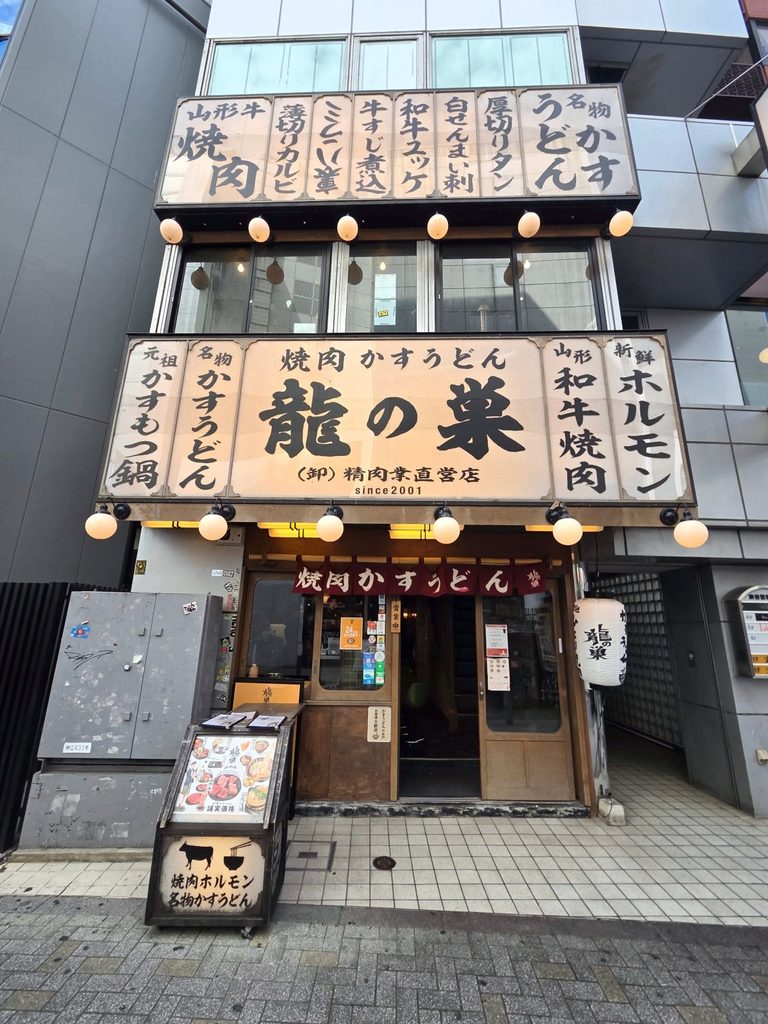
    Walking through Shibuya, I stopped in front of a big sign that read “Yakiniku · Kasu Udon.” Udon at a barbecue place? I was too curious not to go in.
    What is Ryu-no-Su?

    It’s a yakiniku restaurant that also runs a wholesale meat business, serving mainly Yamagata beef. According to the greeting on the menu, they skip the usual yakiniku staples like reimen and bibimbap.

    Instead, their signature is kasu udon, made with abura-kasu: beef intestine slowly fried until crispy. They love it so much they built their own factory to make it. They also welcome guests who come in just for a bowl of udon, which is exactly what I did.

    What’s kasu udon?

    It’s a regional dish from the Osaka area. The crispy abura-kasu releases a rich, savory fat into the broth, so it tastes nothing like the light udon you might be used to.

    What I ordered: Aka Kasu Udon + extra beef

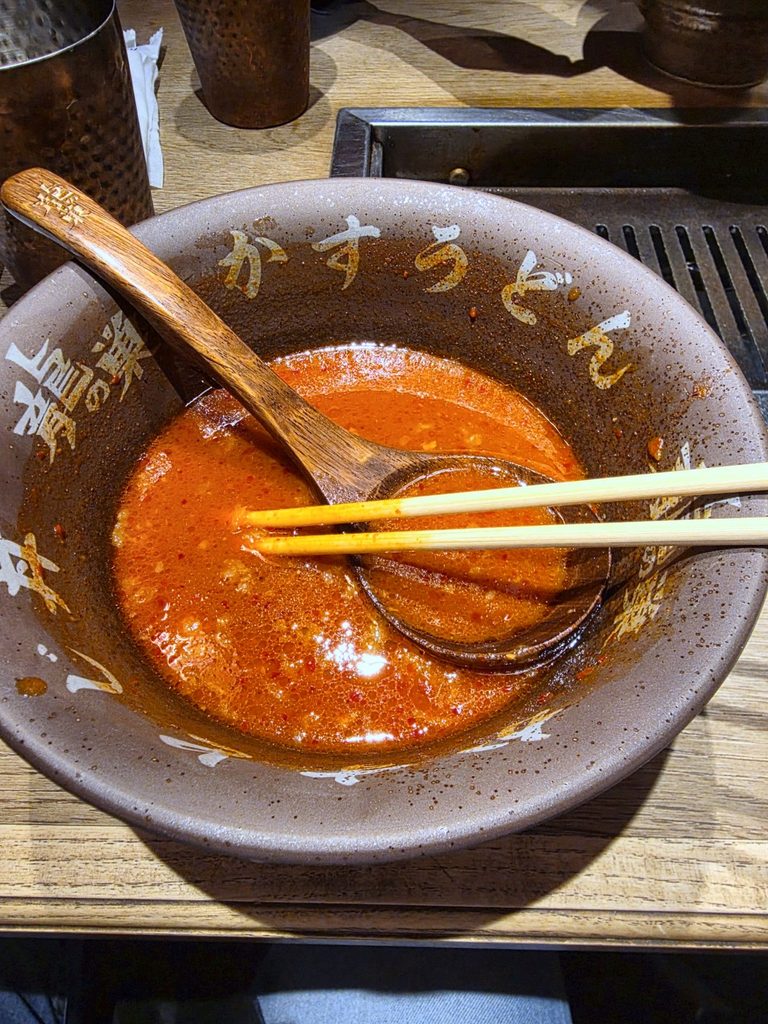
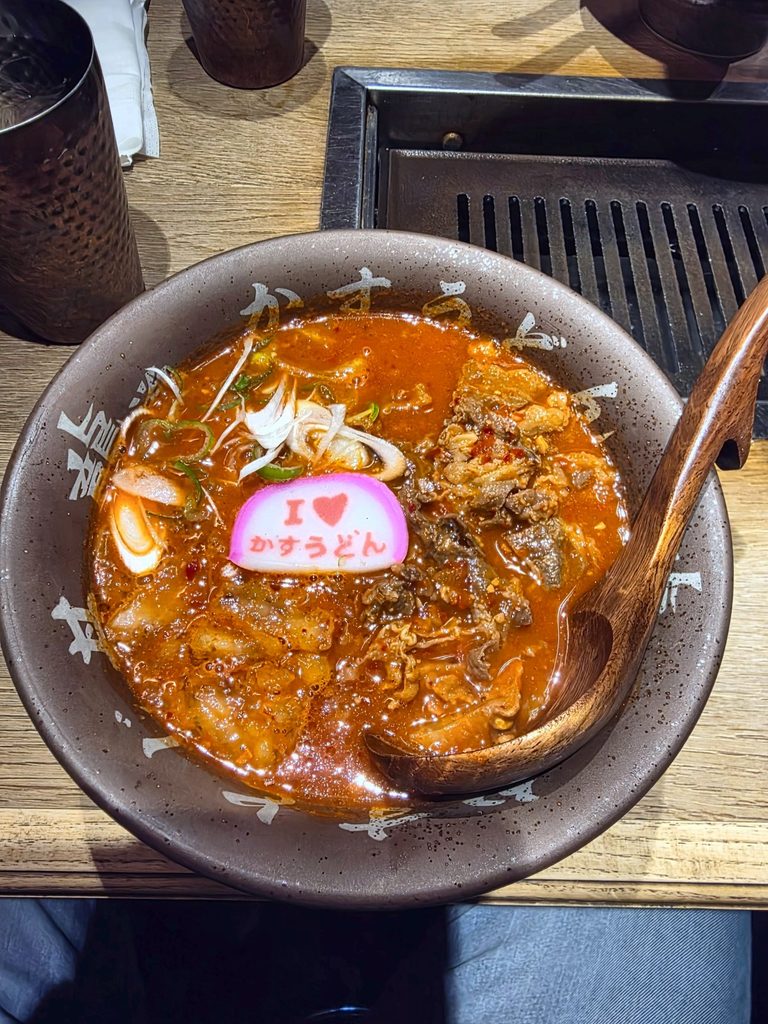
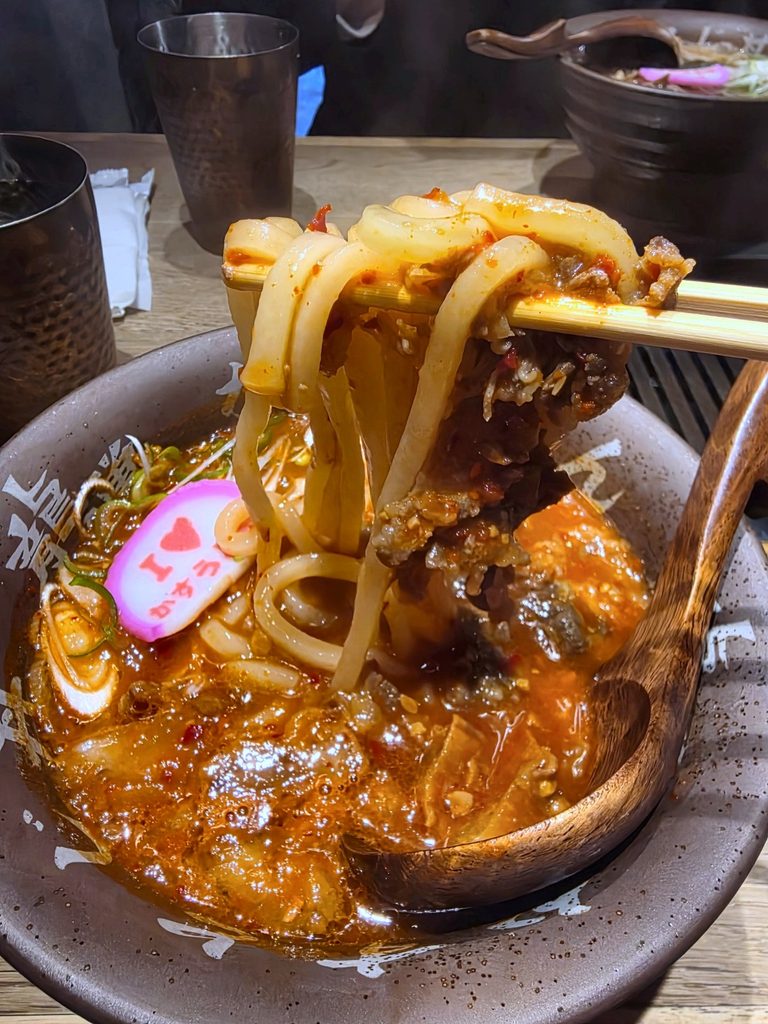
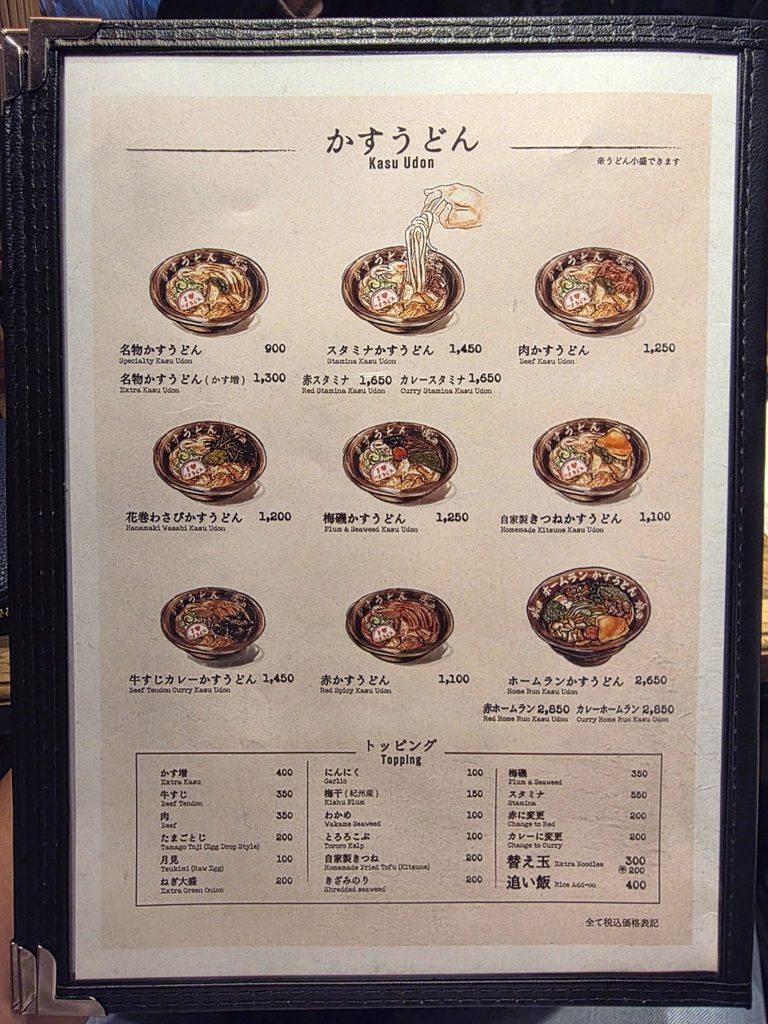
    I had the spicy Aka (Red) Kasu Udon (¥1,100) and added the beef topping (¥350), ¥1,450 in total. The broth was rich, a little sweet, and about as spicy as Korean gochujang: warm, not painful.

    The extra beef was worth it, with tender slices coming up in almost every bite. The noodles were thick and chewy, and I ended up drinking almost all of the soup (the last photo proves it).
    Other options

    • Specialty Kasu Udon ¥900
    • Beef Kasu Udon ¥1,250
    • Stamina Kasu Udon ¥1,450
    • The everything-on-top Home Run Kasu Udon ¥2,650
    • You can ask for a smaller portion of noodles.
    • They also serve Yamagata beef yakiniku, offal and kasu motsu hot pot.
    Good to know

    • The restaurant is cashless only: cards and IC transit cards are accepted.
    • The walls are covered with business cards, banknotes and photos left by guests from all over the world.
    • Every counter seat has its own grill, so it works for solo yakiniku too.

    Info

    Prices are as of my visit.

    Ryu-no-Su Shibuya Honten

    Address: 1F–2F, 36-3 Udagawacho, Shibuya-ku, Tokyo 150-0042

    Hours: Open 24 hours, so it works for a late-night udon craving too.

  • Mud Stains That Survived the Washing Machine: LION NANOX Sock Stain Remover (Before & After)

    Mud Stains That Survived the Washing Machine: LION NANOX Sock Stain Remover (Before & After)

    My child loves catching bugs. After kindergarten, we head to the park, where they hunt for insects, roll around in the dirt, and play in the sandbox. So every day, their clothes and socks come home covered in mud.

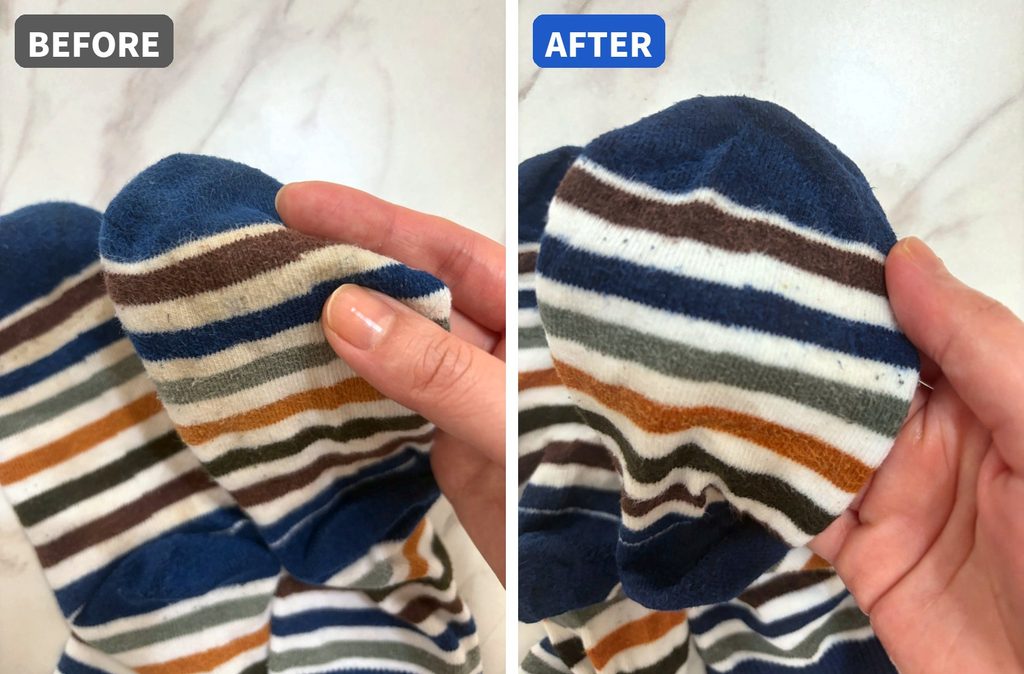
    Here’s the thing: the socks in these photos had already gone through the washing machine once. I tossed them in without thinking, and when I went to hang them up, the soles were still grimy. Scrubbing with laundry bar soap never got them fully clean either, so these days I use LION NANOX Kutsushita Doro (くつ下ドロ).

    What is it?

    It’s a pre-wash stain treatment you apply only to the dirty spots before washing. As the name says, it’s made for socks (kutsushita) and mud (doro).

    • The cap has a built-in scrubbing brush, so you don’t need a separate brush
    • It’s free of fluorescent brighteners, so it’s safe for colored and patterned clothes like my child’s striped socks
    • The label says it tackles mud and odor

    How to use it

    1. Apply it to the dirty area
    2. Let it sit for a little while
    3. Gently scrub with the brush
    4. Wash as usual

    The result

    Stains that survived a full machine wash came out this clean! And honestly, these weren’t even the worst. It works on much dirtier socks too. Best of all, it barely takes any effort, so I don’t get as frustrated when my kid comes home muddy. Now I can actually say, “Go ahead, have fun!”

    My take

    • Good: Lifts mud that a machine wash left behind, with little effort. Built-in brush, and safe for colored clothes
    • Best for: Families with kids who play outside, or anyone who does sports

    Where to buy

    I bought a NANOX pre-wash 3-pack on Amazon Japan for ¥1,980, which works out to about ¥660 each. The set includes:

    • Kutsushita Doro (くつ下ドロ): for socks and mud (the one in this post)
    • Shimi (シミ): for food stains
    • Eri Sode (エリそで): for collar and cuff grime

    Prices are as of my purchase and may change.

    Keep detergents out of reach of children.

  • Menya Musashi Kosho in Roppongi: The #1 Rich Tsukemen and Melt-in-Your-Mouth Flame-Grilled Chashu

    Menya Musashi Kosho in Roppongi: The #1 Rich Tsukemen and Melt-in-Your-Mouth Flame-Grilled Chashu

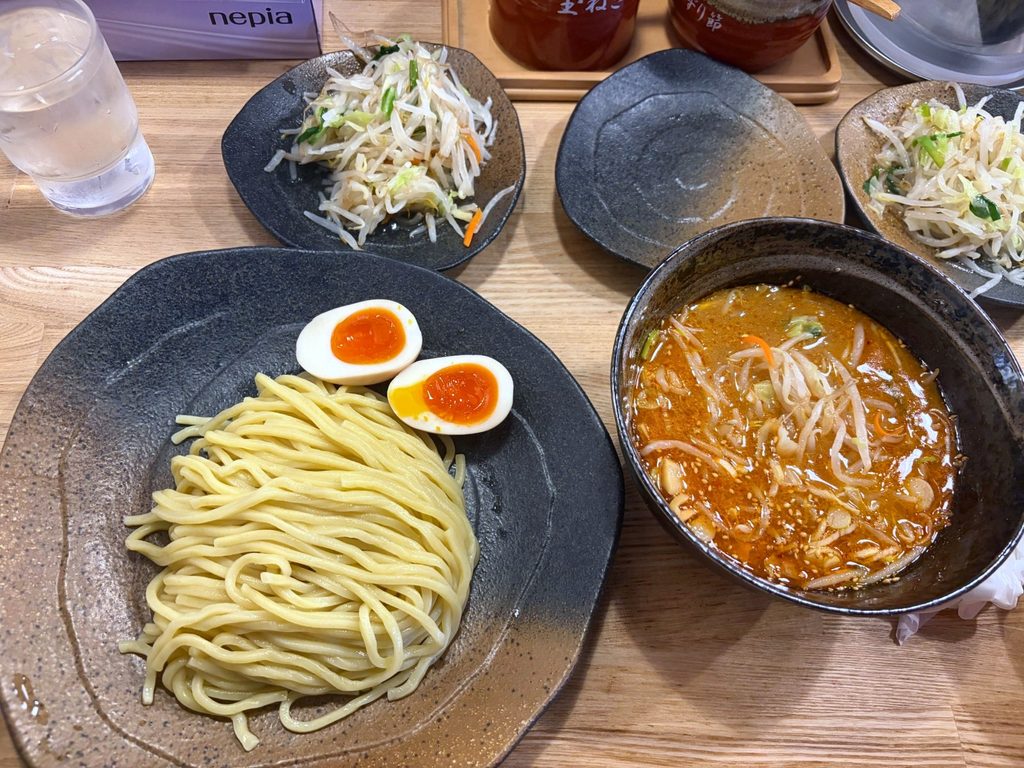
    My husband loves tsukemen (dipping noodles), so we try a lot of tsukemen shops together. This time we went to Menya Musashi Kosho (麺屋武蔵 虎嘯) in Roppongi. One of my business partners is nearby, which is how we found it. It’s a well-known spot, so expect a line at both lunch and dinner. We arrived a little before the lunch rush and still waited about 15 minutes.

    Rich seafood broth and thick noodles

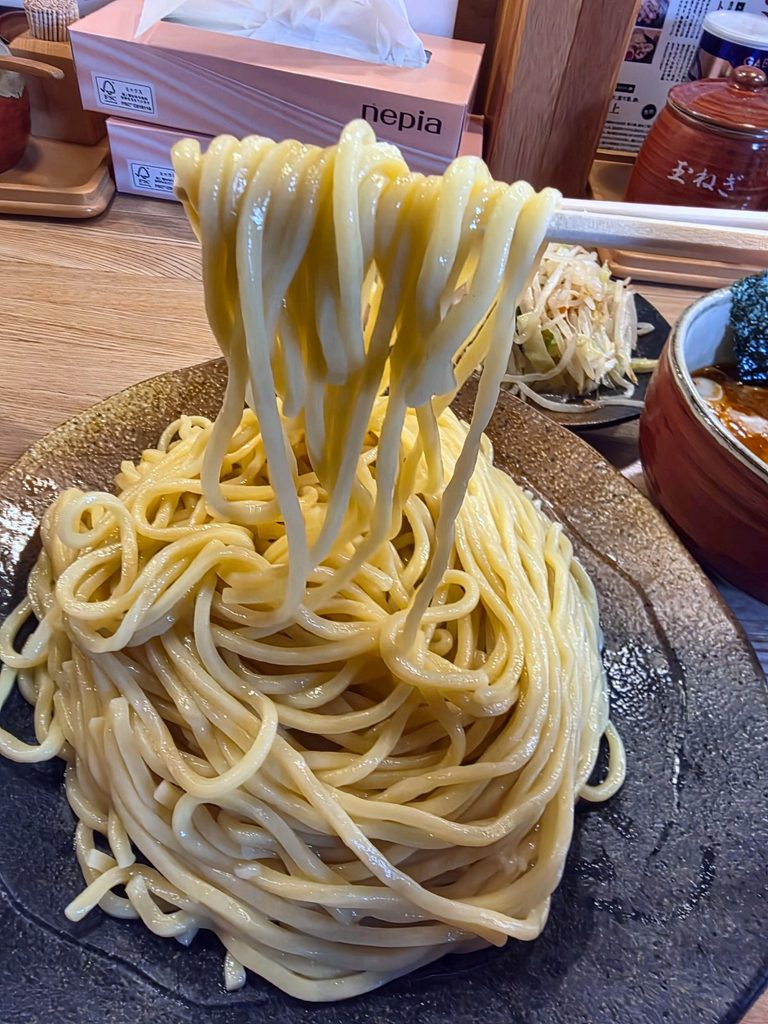
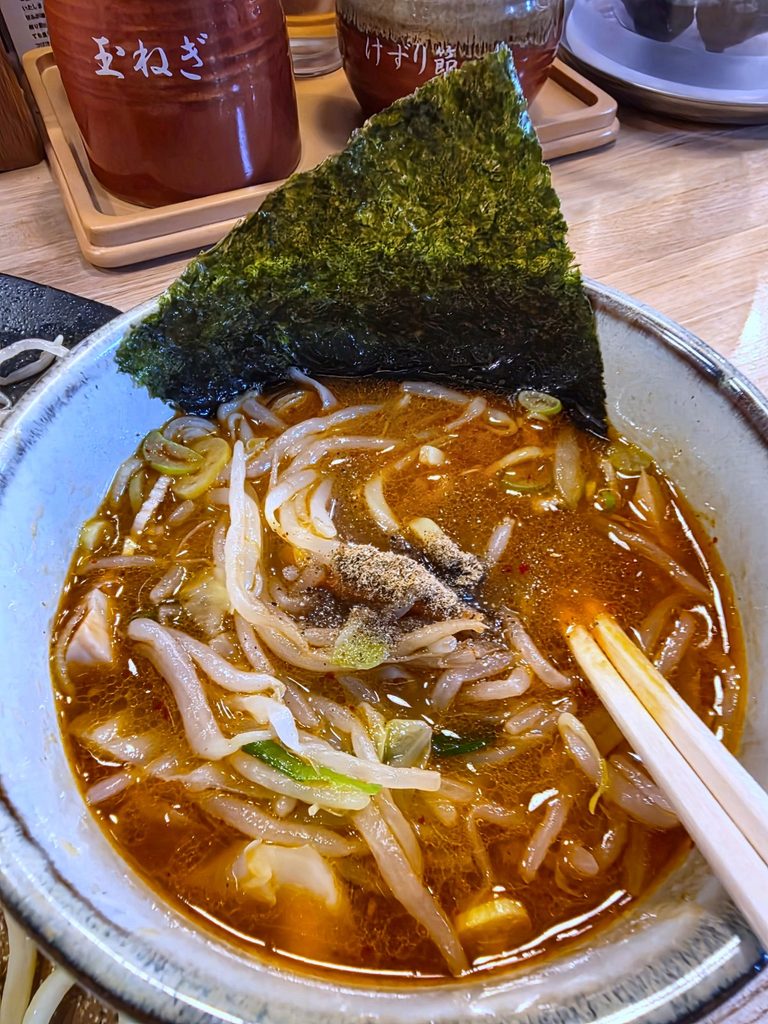
    The dipping broth is a rich gyokai (seafood) style, with a deep fish flavor up front. To match it, the noodles are thick and slightly flat, so they carry plenty of that heavy broth in every bite.

    The star: flame-grilled chashu

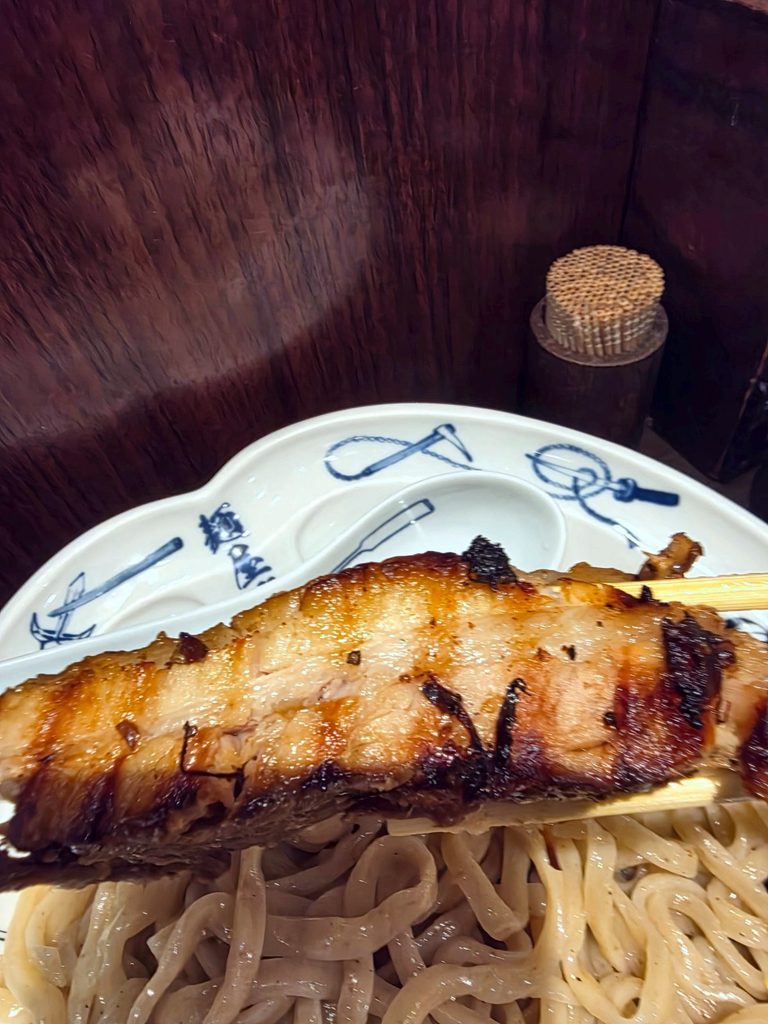
    The kitchen grills a thick slab of chashu (braised pork) to order before it goes on your plate. It’s smoky, and it melts in your mouth. Honestly, the chashu alone is worth the trip.

    Order the #1 bestseller

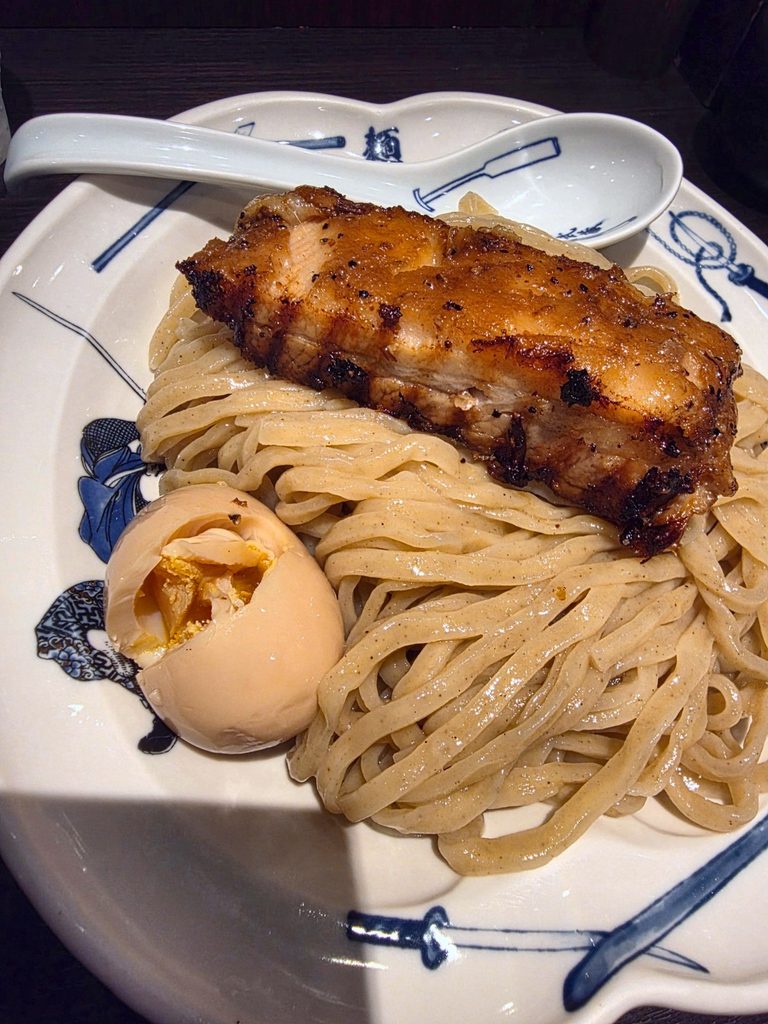
    We ordered the shop’s #1 most popular dish, the Rich Kosho Tsukemen (濃厚虎嘯つけ麺, ¥1,690). It comes with a thick slab of flame-grilled chashu and a seasoned soft-boiled egg. You can get more noodles for the same price, but the portions are already generous, so I went with the regular size and was plenty full.

    [Photo: 03_tsukemen-plate] [Photo: 04_chashu-and-egg]

    You can choose from 9 noodle sizes, and everything up to 3.5x costs the same.

    SizeBefore boilingAfter boilingExtra
    Regular (並)180g280gnone
    Medium (中)235g370gnone
    Large (大)285g450gnone
    2x360g570gnone
    2.5x450g710gnone
    3x540g850gnone
    3.5x630g1kgnone
    4x850g1,350g+¥100
    5x1kg1,580g+¥150

    The regular size (280g after boiling) was already plenty for me, so I’d recommend it for a first visit.

    The plates are decorated with Miyamoto Musashi, the famous swordsman, and drawings of swords, which makes the meal fun to look at too.

    My take

    • Good: Melt-in-your-mouth smoky chashu, thick noodles that match the rich broth, and the same price up to 3.5x noodles
    • Not so good: There’s a line day and night. Even if you arrive before the lunch rush, plan on waiting around 15 minutes
    • Best for: Fans of rich tsukemen, anyone looking for a hearty meal in Roppongi

    Info

    Prices are as of my visit and may change.

    Name: Menya Musashi Kosho (麺屋武蔵 虎嘯), Roppongi

    Location: [1 min walk from Roppongi Station]

    Hours: [check Google Maps before you go]

  • Yasubee Tsukemen in Takadanobaba: A 15-Year Regular’s Guide (Same Price for Any Size!)

    My husband and I are both noodle lovers, so we eat tsukemen (dipping noodles) a lot. But there’s one place I’ve been going to since my student days in Tokyo, more than 15 years ago: Tsukemen-ya Yasubee in Takadanobaba.

    Why I love Yasubee

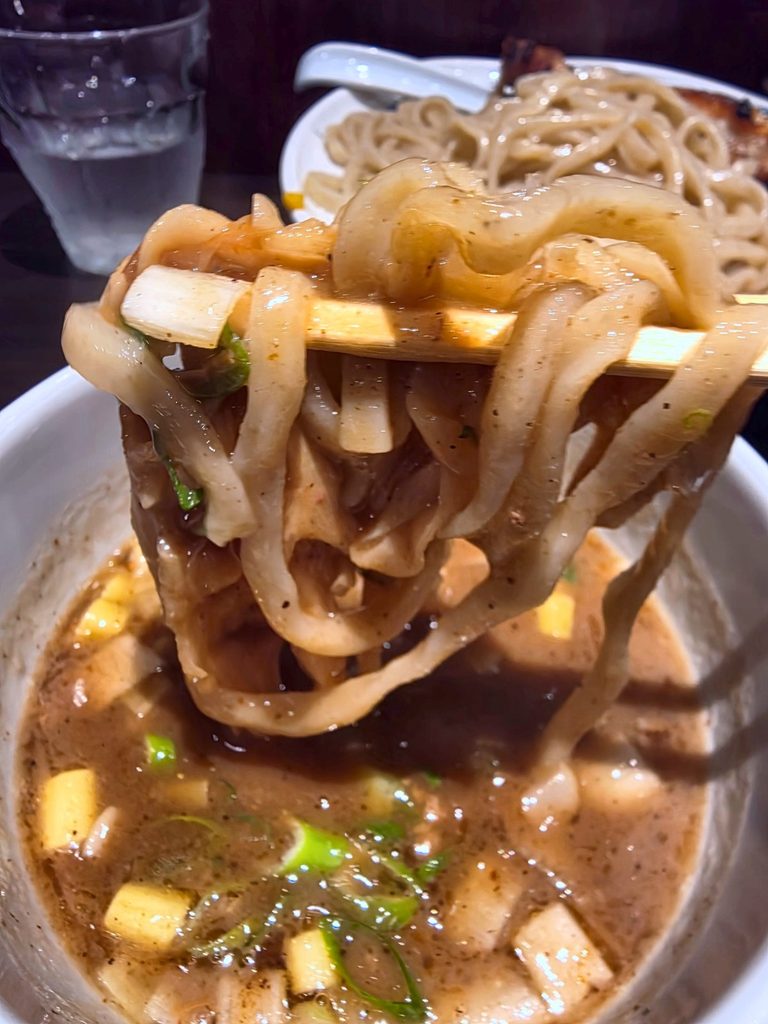
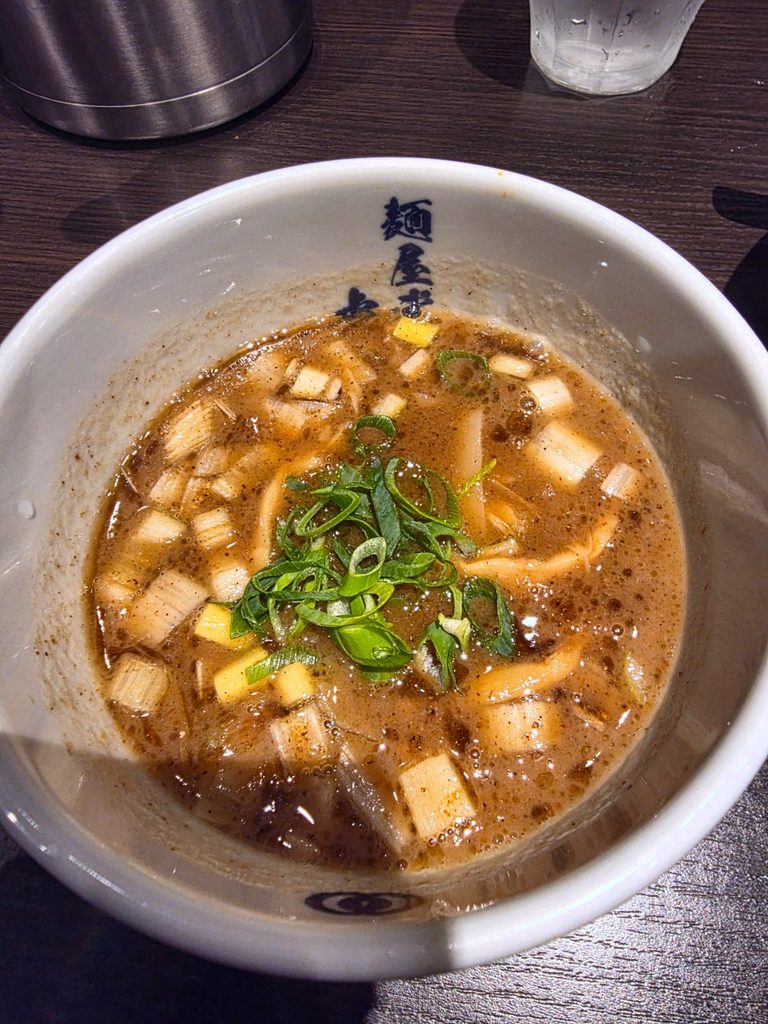
    Tsukemen dipping broth is usually rich and salty, but Yasubee’s is lighter in saltiness. That means you can dunk the noodles deep into the broth without it getting too salty. The noodles are thick and chewy, so they pick up the broth nicely.

    Why I love Yasubee

    Tsukemen dipping broth is usually rich and salty, but Yasubee’s is lighter in saltiness. That means you can dunk the noodles deep into the broth without it getting too salty. The noodles are thick and chewy, so they pick up the broth nicely.

    [Photo: 06_noodle-dip]

    Huge portions, and every size costs the same

    At Yasubee, small, regular, medium, and large all cost the same price. The portions are so big that even the small size (180g) is sometimes too much for me.

    SizeNoodlesPrice
    Small (小盛り)180g¥1,080
    Regular (並盛り)220g¥1,080
    Medium (中盛り)330g¥1,080
    Large (大盛り)440g¥1,080
    Extra large (特盛り)550g+¥200

    Tip: Order the small size and you get one topping for free. Choose from a seasoned soft-boiled egg, boiled dumplings, bamboo shoots, vegetables, nori, green onion, or sesame. It’s the perfect amount for a first visit.

    How to order: the ticket machine

    Buy a meal ticket from the machine by the entrance and hand it to the staff. It takes cash and IC cards like PASMO and Suica. The main options are classic tsukemen (¥1,080), miso tsukemen (¥1,180), and spicy tsukemen (¥1,080). You can make it double spicy or MAX spicy for free.

    I ordered the small and picked the ajitsuke tamago (soy-marinated soft-boiled egg) as my free topping. I also highly recommend the vegetable topping. The bean sprouts stay crunchy and delicious. Here’s my trick: drop the vegetables into the dipping broth early so they soak up the flavor. Everything tastes better when it’s seasoned just right!

    Free toppings on the table

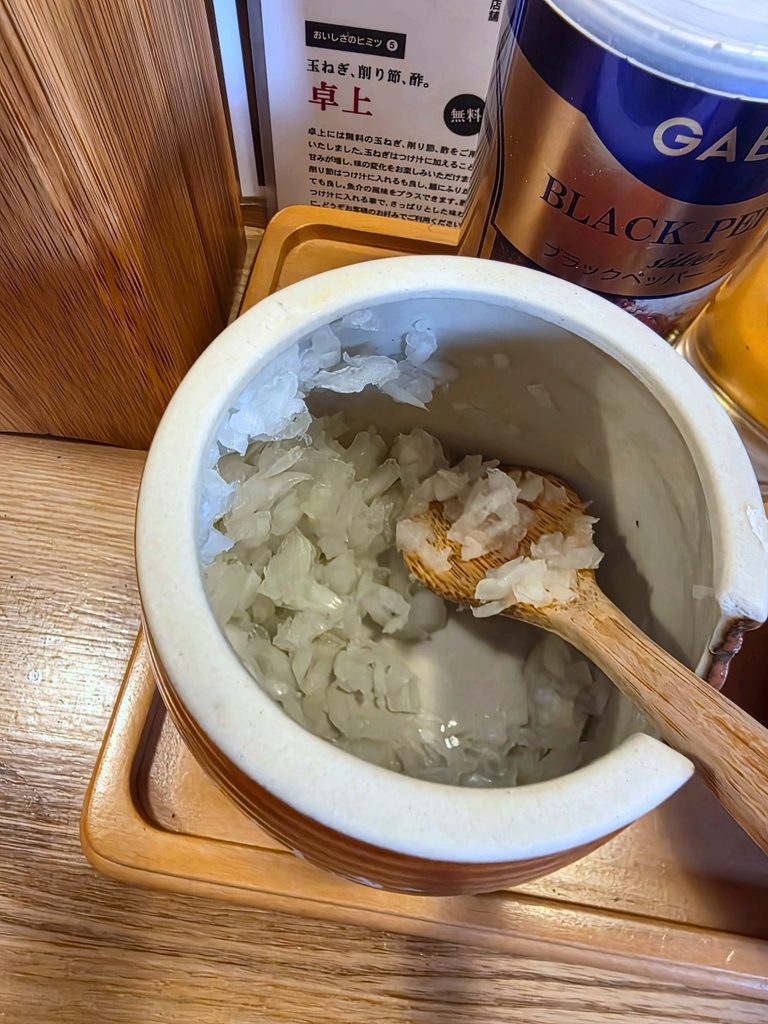
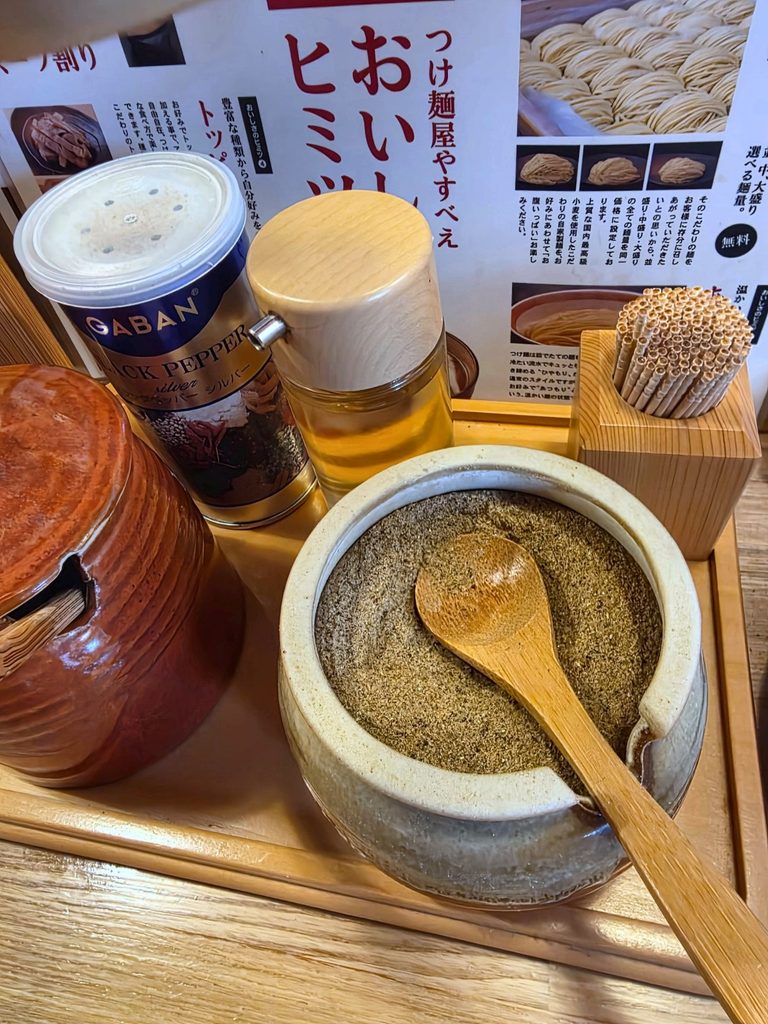
    Every seat comes with chopped onion. Add a big spoonful to your broth for a fresh, crunchy bite. It’s my favorite part. There are also free bonito flakes, vinegar, and black pepper. Bonito flakes add a deeper fish flavor, and a little vinegar makes the broth lighter.

    Finish with soup-wari

    When you’re done with the noodles, ask the staff for “soup-wari, onegaishimasu.” They’ll add hot broth to your leftover dipping sauce so you can drink it like soup. It’s free too.
    My take

    • Good: Light broth that’s great for dunking, and a free topping with the small size
    • Not so good: Portions are big, so first-timers should start with small
    • Best for: Tsukemen beginners, anyone who finds rich broth too heavy, big noodle eaters

    Info

    • Name: Tsukemen-ya Yasubee, Takadanobaba (つけ麺屋やすべえ)
    • Location: Takadanobaba, Shinjuku, Tokyo, [3 min walk from Takadanobaba Station]
    • Payment: ticket machine (cash and IC cards)
    • Takeout and Uber Eats available
    • Hours: [check Google Maps before you go]

  • Ka Pod Laundry Pods from Japan (Review) + My Costco Scent Booster Trick for Fresh-Smelling Drawers

    Ka Pod Laundry Pods from Japan (Review) + My Costco Scent Booster Trick for Fresh-Smelling Drawers

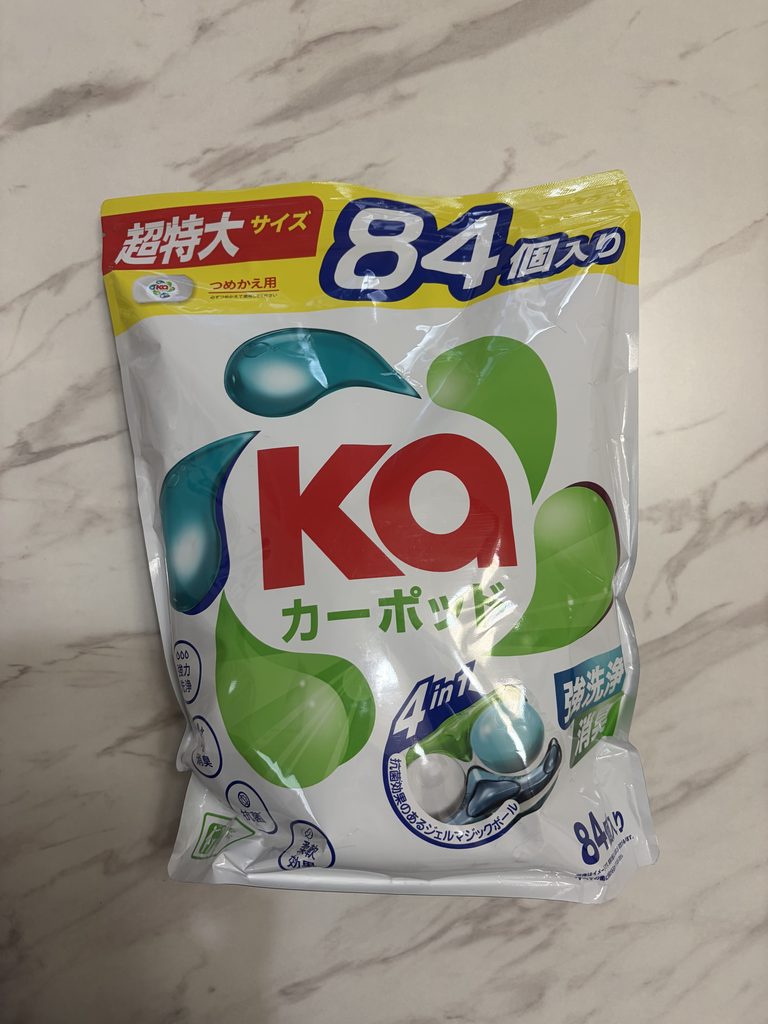
    I’m a homebody, so lately I’ve been more into home and laundry finds than going out. Today I want to share a Japanese laundry pod I keep buying again and again: Ka Pod (カーポッド).

    What is Ka Pod?

    It’s a laundry pod made in Japan. Each “gel magic ball” is a 4-in-1 pod that cleans, deodorizes, fights bacteria, and softens, so you don’t need separate fabric softener. It cleans well, but honestly, I keep buying it for the scent. The version I use, Timeless Clean, smells like citrus tea and white musk, and it’s often said to smell similar to a lululemon store.

    I buy it from Costco Japan online

    You can find Ka Pod on Amazon Japan too, but I usually order it from Costco Japan’s online store.

    • Costco: 84-pod 2-bag set ¥6,388 → ¥5,098 on sale (shipping included)
      → about ¥2,549 per 84-pod bag, about ¥30 per pod
    • Amazon Japan: the same Timeless Clean 84-pod refill ¥2,933 (about ¥35 per pod)

    On sale, Costco works out about ¥380 cheaper per bag.

    The sample I fell for: Ginger Flower

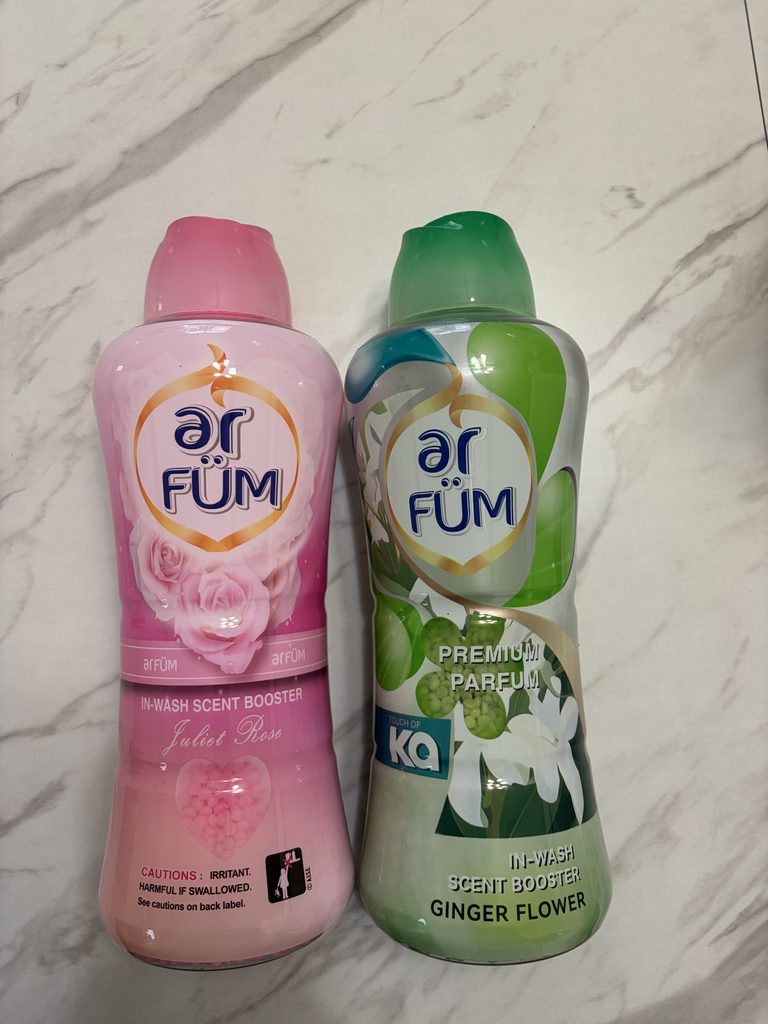
    One sample was a Ginger Flower fabric softener, and I loved the scent. So this time, I bought the same scent as a solid scent booster.

    • arFUM Scent Booster, Ginger Flower, 1kg (lilac and white musk): ¥2,398
    • arFUM Scent Booster, Juliet Rose, 1kg (peach and rose): ¥2,398

    Both are online-only items at Costco Japan. The Ginger Flower bottle even says “Touch of Ka,” so it pairs nicely with Ka Pod.

    My home tip: scent boosters in your drawers

    Scent boosters are meant for the wash, but I also use them like this:

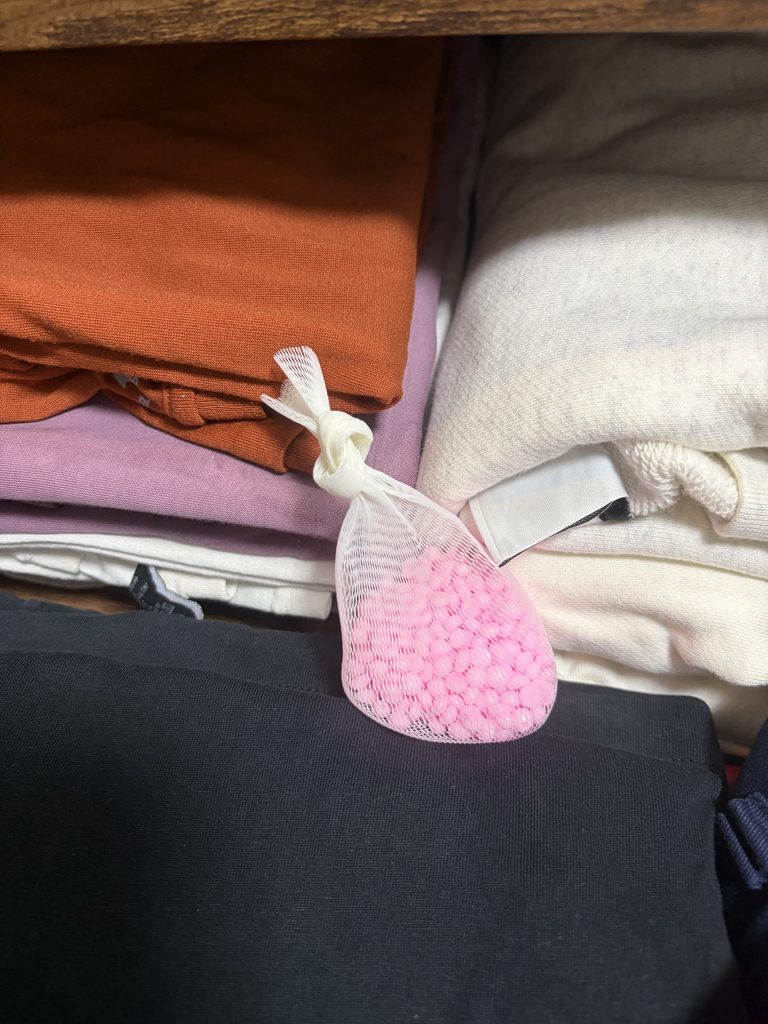
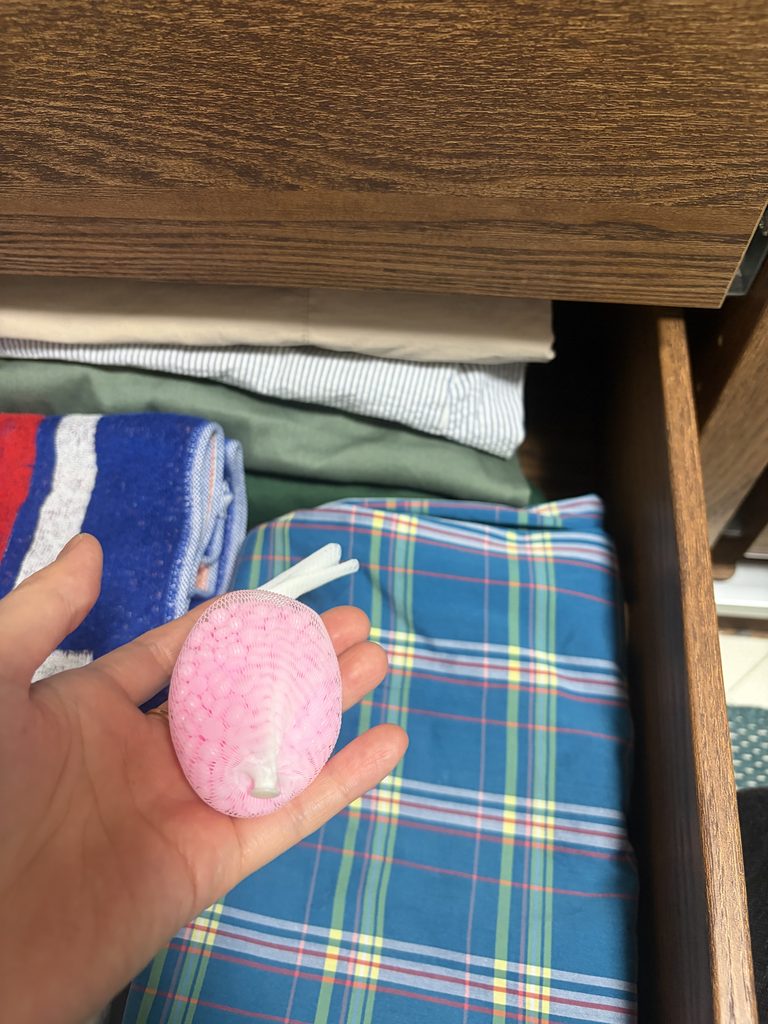
    1. Put some scent booster beads in a small mesh bag and tie it
    2. Tuck it into a clothes drawer or closet
    3. Every time you open the drawer, you get a soft scent, and it gently transfers to your clothes

    When the scent fades, make a new one, and toss the old beads into your next load of laundry. Nothing goes to waste.

    ⚠️ Scent boosters are harmful if swallowed. If you have kids, keep these sachets in a drawer they can’t reach. The same goes for laundry pods.

    One honest note

    I know there’s discussion about microplastics in some laundry products. But honestly, I just can’t give up a good scent. Fresh-smelling laundry makes me that happy.

    My take

    • Good: One pod and you’re done, a lovely scent, and Costco samples let you try new scents
    • Not so good: The big bags feel pricey upfront (cheap per pod, though)
    • Best for: Anyone who loves fresh-smelling laundry, people who don’t want to add softener separately, Costco members in Japan

  • Corail Cafe & Labo in Hayama: A Tiny Sea-View Cafe Hidden in a Beach Parking Lot (Menu & Prices)

    Corail Cafe & Labo in Hayama: A Tiny Sea-View Cafe Hidden in a Beach Parking Lot (Menu & Prices)

    On a sunny weekend, we drove to Hayama with our child. The water there is clear, and the sea stays shallow for a long way out, so kids can splash around safely. Look closely between the rocks and you’ll find small crabs and tiny sea creatures everywhere. It’s one of our favorite family spots.

    Our usual parking lot was full that day, so we kept driving south along the coast and found a much bigger one: the Nagayagasaki prefectural parking lot. After parking, I noticed a small cafe tucked into the corner of the lot. I told myself, “We’re getting coffee there before we go home.”

    What is Corail Cafe & Labo?

    It’s a small cafe run by Hayama Hotel Otowanomori, a local hotel. It opened in 2024. “Corail” means coral in French. All the sweets and drinks are made by the hotel’s pastry chef and bartender, and everything can be taken out.

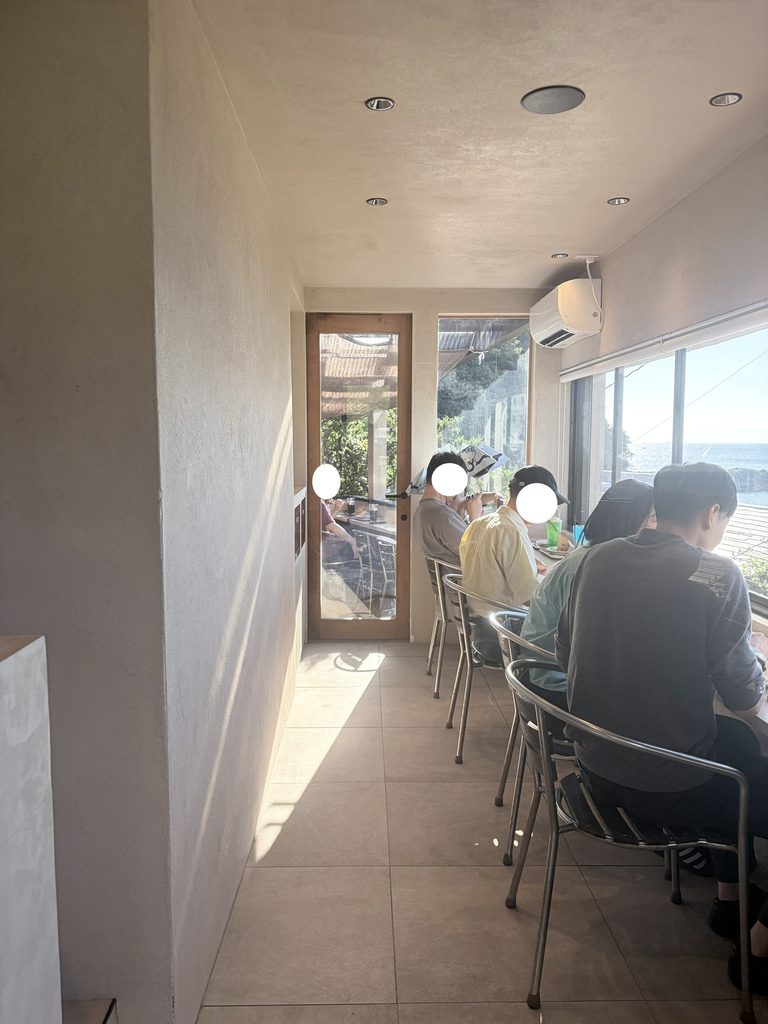
    The inside is simple. There’s one long counter facing a big window, so every seat looks straight out at the sea. There are only about 10 seats in total, including a small terrace. When we stopped by on our way home, every seat was taken, so we ordered takeout and enjoyed it in the car. On a weekend afternoon, I’d plan on takeout.

    The muffins

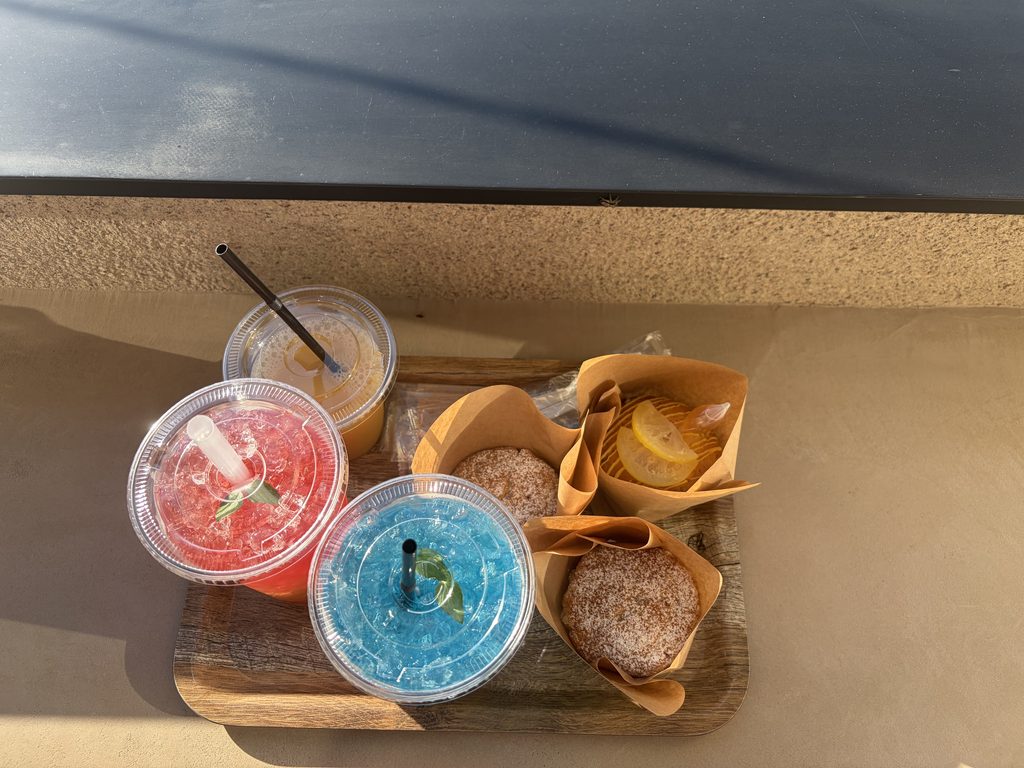
    The glass case is full of seasonal muffins made by the hotel’s pastry chef. We had two:

    • Plain (¥500): Simple, but very soft and moist
    • Hayama Honey (¥700): Made with local Hayama honey, topped with lemon slices and a little dropper of honey. This was my favorite.

    Both were moist and tender, not dry at all. That day the case also had a persimmon muffin (¥600), an apricot muffin (¥650), and a new Hayama cream puff (¥650).

    Drinks: Hayama Sunset & Hayama Beach

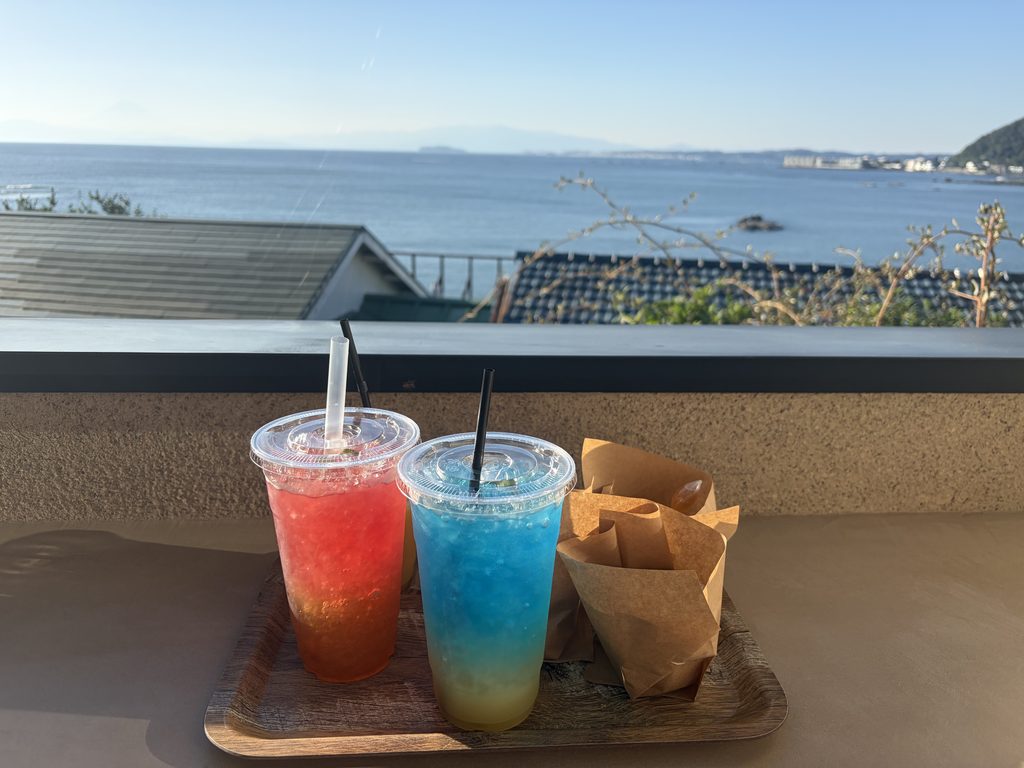
    We ordered the two non-alcoholic cocktails named after Hayama (¥900 each). Hayama Sunset fades from red to orange like an evening sky. Hayama Beach goes from bright blue to yellow, like the sea and the sand. They’re sweet, so kids will love them, and they look great in photos.

    Other menu items (prices tax included)

    • Coffee ¥600 (regular) / ¥700 (tall), café latte ¥600
    • Cream soda ¥800
    • Hotel cheesecake ¥600 (whole cake to go ¥2,970)
    • Hayama Beef Curry ¥2,200 (limited to 10 a day)
    • Croque monsieur ¥1,500, onion gratin soup ¥1,500 (seasonal)

    Little details I loved

    The coffee guide on the shelf seems to be made from pieces of sea glass. They also sell “Sea Glass” kohakuto, a jewel-like Japanese sugar candy, for ¥1,400 a jar. It looks just like the sea glass you find on Hayama’s beaches, so it makes a lovely souvenir.

    Tips for families

    There’s a sign at the entrance asking you to brush the beach sand off before coming in. If you’re coming straight from the beach like we were, give everyone’s feet a quick dust-off first.

    My take

    • Good: Moist, hotel-quality muffins, a sea view from every seat, and parking right outside
    • Not so good: Only about 10 seats, so it fills up fast on weekends
    • Best for: Families after a beach day, couples on a coastal drive, anyone looking for a Hayama souvenir

    Info

    • Name: Corail Cafe & Labo (Hayama Hotel Otowanomori)
    • Location: Inside the Nagayagasaki prefectural parking lot, along Route 134, Hayama, Kanagawa
    • Hours (as of my visit): Weekdays 11:00–18:00, weekends 9:00–18:00 (last order 17:45)
    • Closed: Tuesdays
    • Hours may change, so check their Instagram (@corail_cafe_and_labo) before you go.

  • SOU・SOU Aoyama, Tokyo: I Came for the Tabi Shoes but Fell for the Stationery (Prices Inside)

    SOU・SOU Aoyama, Tokyo: I Came for the Tabi Shoes but Fell for the Stationery (Prices Inside)

    SOU・SOU KYOTO 青山店

    When my sister-in-law visited me from Korea, SOU・SOU was on her must-visit list. I live in Japan but had never been inside, so we went to the Aoyama store in Tokyo together. The first thing I noticed was the floor. Even the carpet is covered in hand-drawn numbers.
    What is SOU・SOU?

    SOU・SOU was founded in Kyoto in 2002 by a textile designer, an architect, and a producer, with the concept of “creating a new Japanese culture” through original patterns inspired by Japan’s four seasons. Its designer, Katsuji Wakisaka, joined Marimekko as a textile designer in 1968, so Marimekko fans will feel right at home.

    I came for the tabi shoes

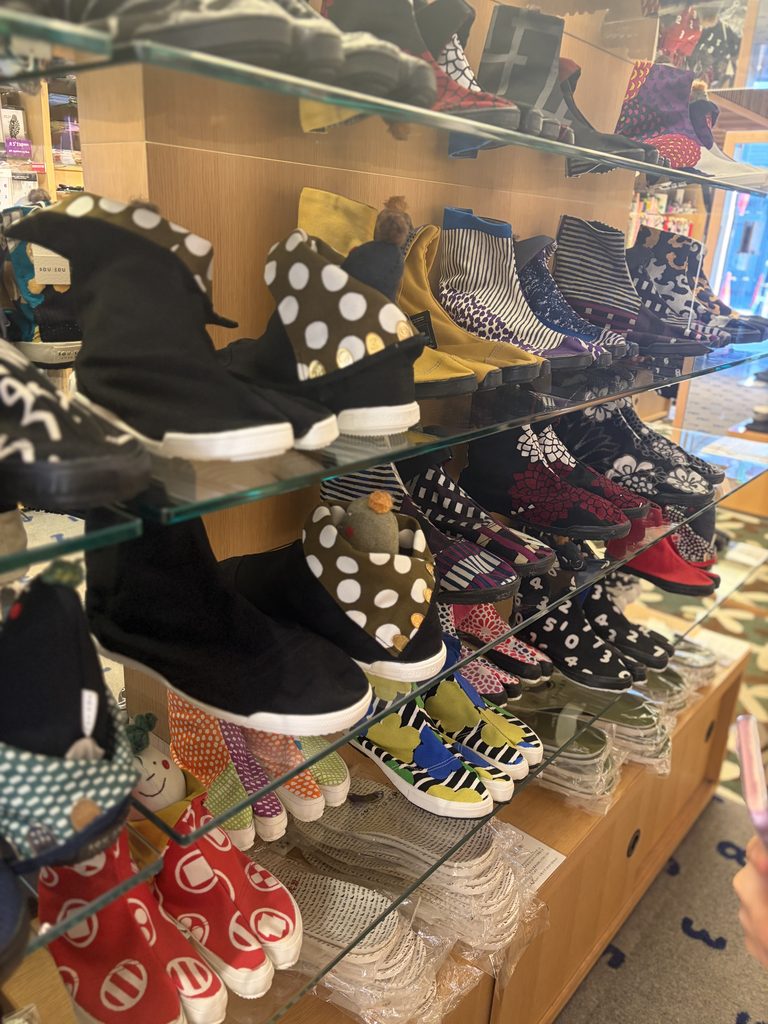
    Before the visit, I was excited about the colorful jika-tabi, traditional split-toe work shoes that SOU・SOU turns into everyday sneakers. In person there were polka dots, florals, numbers, and even a Hello Kitty collaboration.

    But since they’re shoes, they’re on the pricier side, and I hesitated for a while. If you’re new to the brand, the split-toe socks are an easier start. The store labels its best sellers “No.1, No.2, No.3.”

    But the small goods stole the show

    There were far more small goods than I expected. My sister-in-law and I both love good-value finds, and we stood in front of the tote bags for ages. They’re light, the colors are lovely, and the price was surprisingly low. As a mom, I also found myself drawn to the kids’ clothes first.

    A must for stationery lovers

    I’m a big stationery fan, and I immediately thought, “This would look so cute in my pencil case.” The correction tape and glue tape are a collaboration with KOKUYO, the maker of Campus notebooks. The correction tape is ¥380 and the gel pen is ¥330 (tax included).

    And the book cover! Black fabric with embroidered numbers. It looks even better in person. The A6 size is ¥2,480.

    The soup bottle I keep thinking about

    A palm-sized 160ml soup bottle made with POKETLE, ¥2,310 (tax included). I didn’t buy it that day, and I’ve been thinking about it ever since. Next time, it’s coming home with me.

    The real heroes of the store

    The store was busy, and two dads who’d clearly been dragged along by their daughters were sitting side by side on these stools. Even the waiting seats are covered in SOU・SOU fabric.

    My take

    • Good: More small goods than expected, with lots of affordable items like stationery and tote bags
    • Not so good: The signature tabi shoes are on the pricier side
    • Best for: Moms, stationery and tumbler lovers, anyone looking for a gift with a Japanese feel

    Store info

    • Store: SOU・SOU Tokyo Aoyama
    • Access: [OMOTESANDO station, 7minutes on foot]
    • Online: SOU・SOU official website https://www.sousou.co.jp